
Research Work
2018
University of Pennsylvania
Construction in Crisis – Building Shelter and Climate Change
Instructor: Franca Trubiano
Collaborator:
Dan Hurley
Long Ye

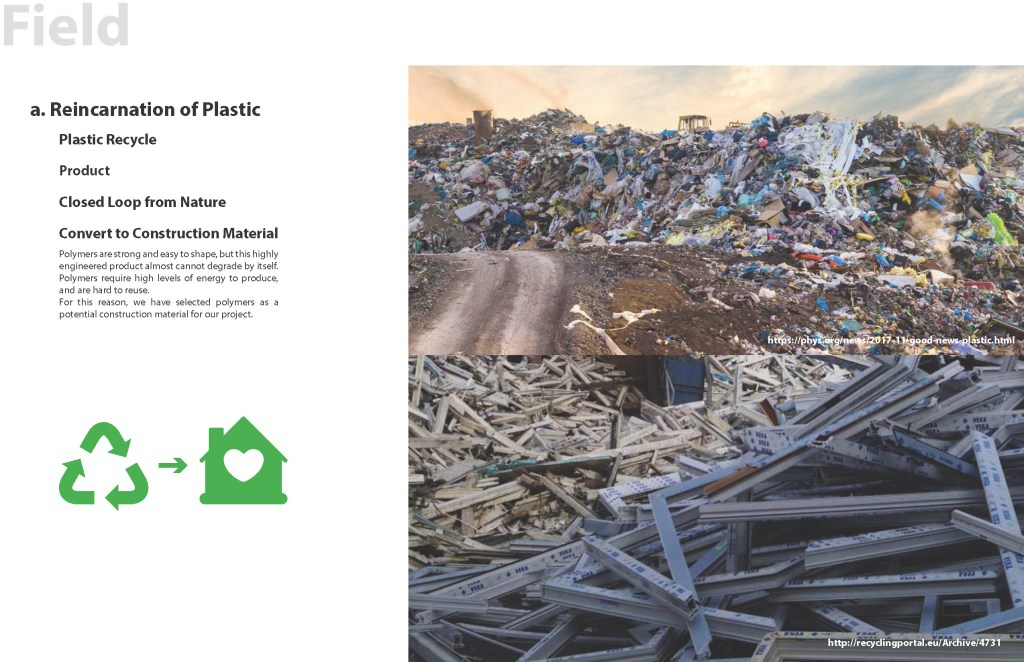


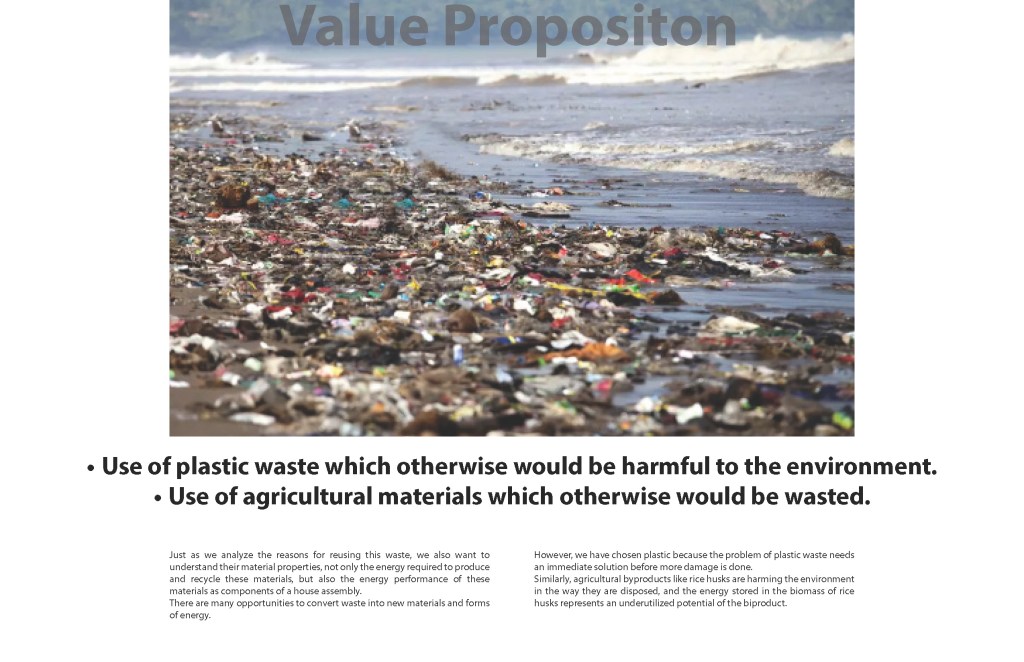

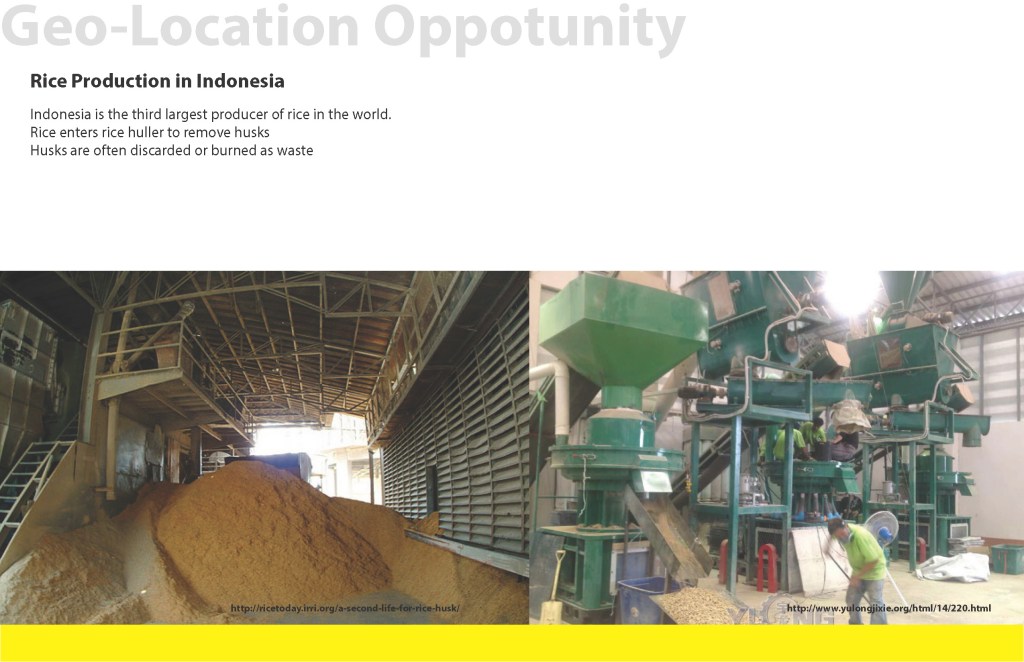

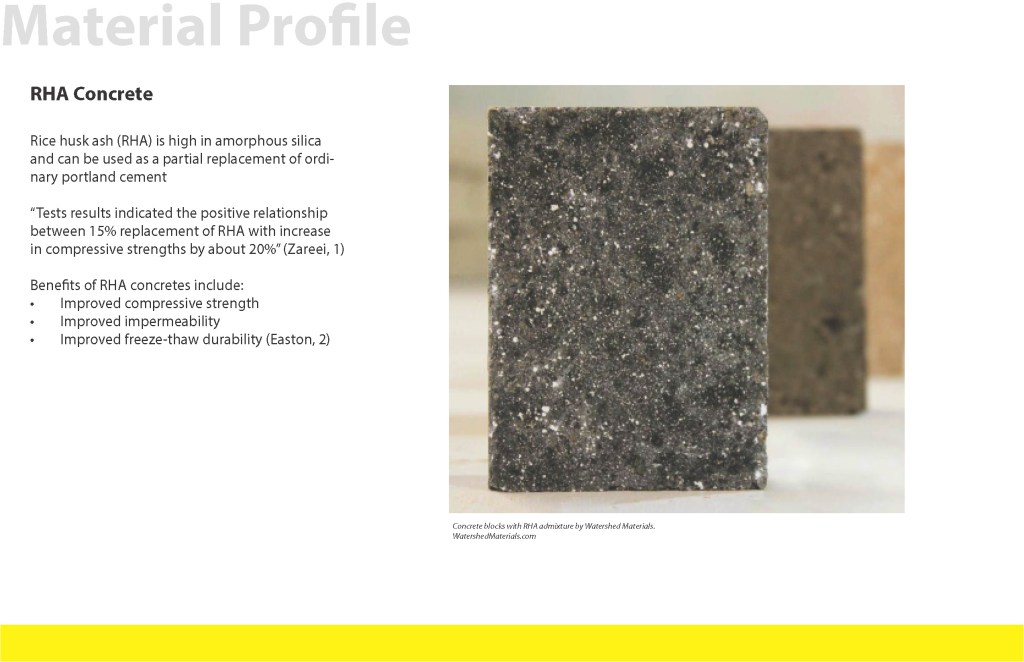

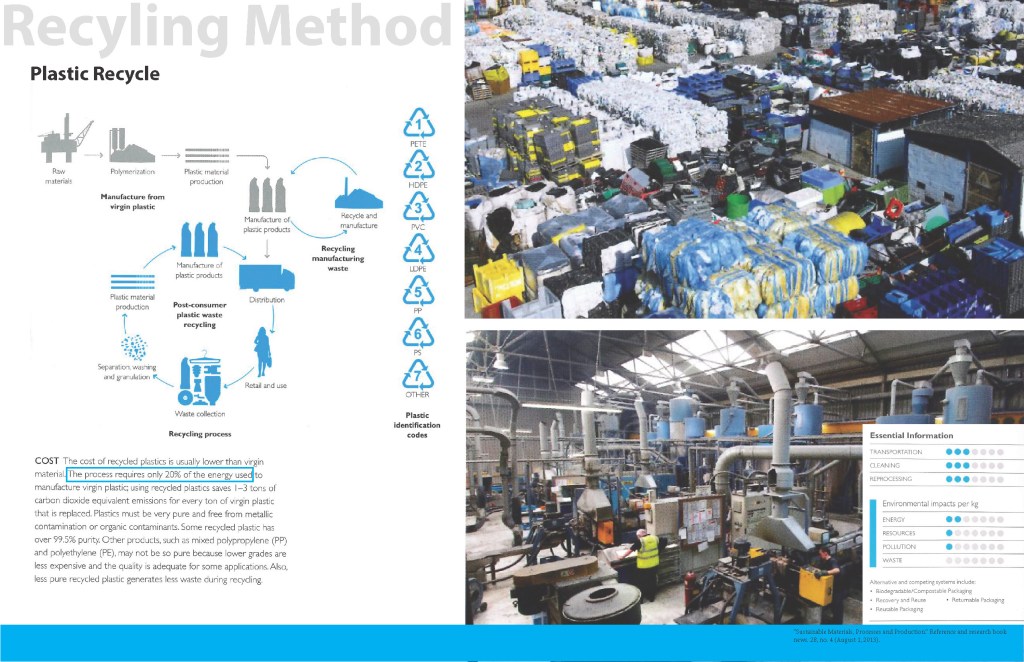
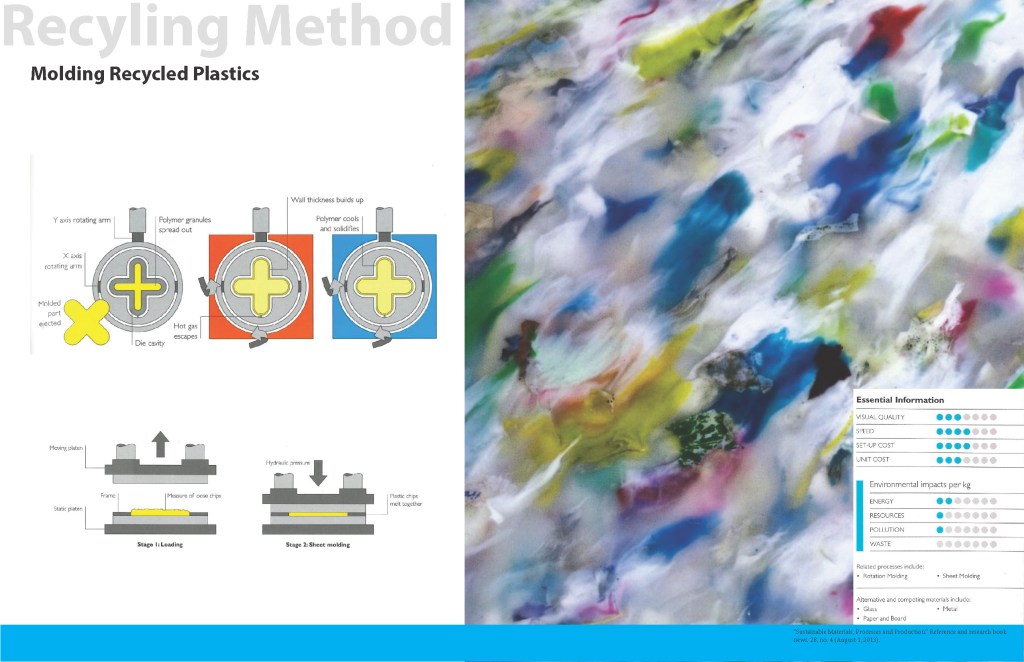

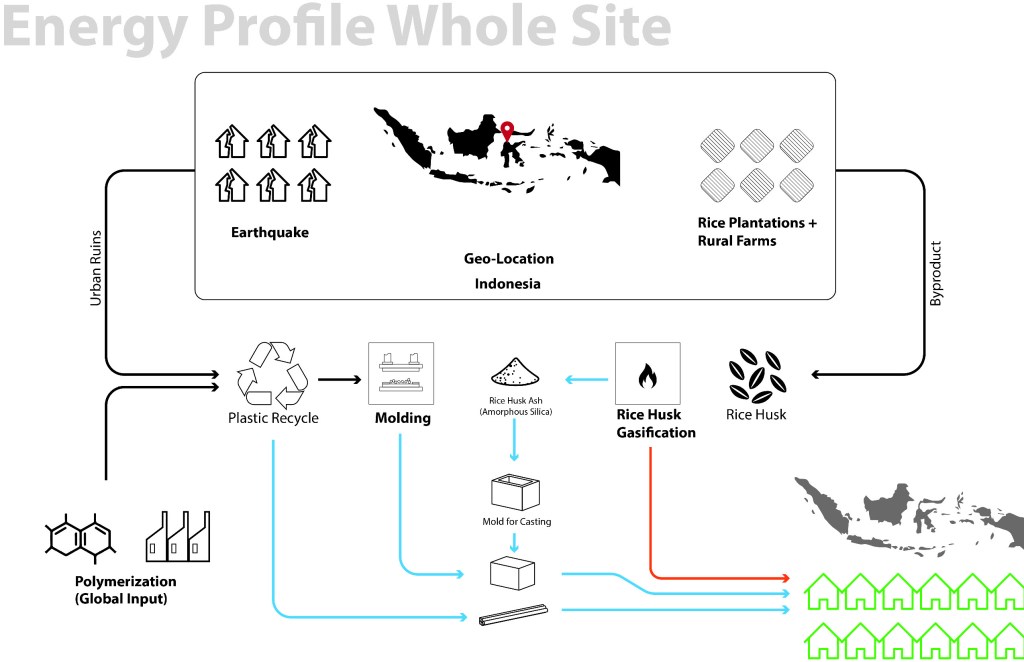




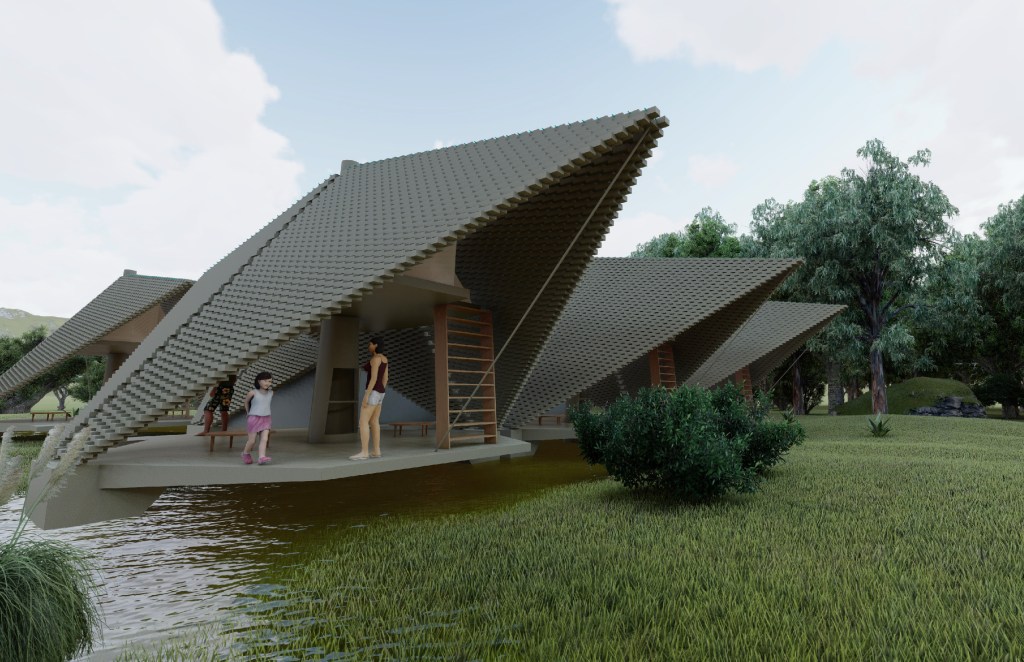

Humans take resources and energy from the natural environment but also produce a lot of garbage. Natural disasters destroy the built environment, resulting in unused construction waste. Debris, such as discarded PVC, will remain intact for centuries before decomposing. As designers, we need to develop new ways to reuse these materials. Our project focuses on extending the lifecycle of these materials. We call our project Reincarnation of Waste.
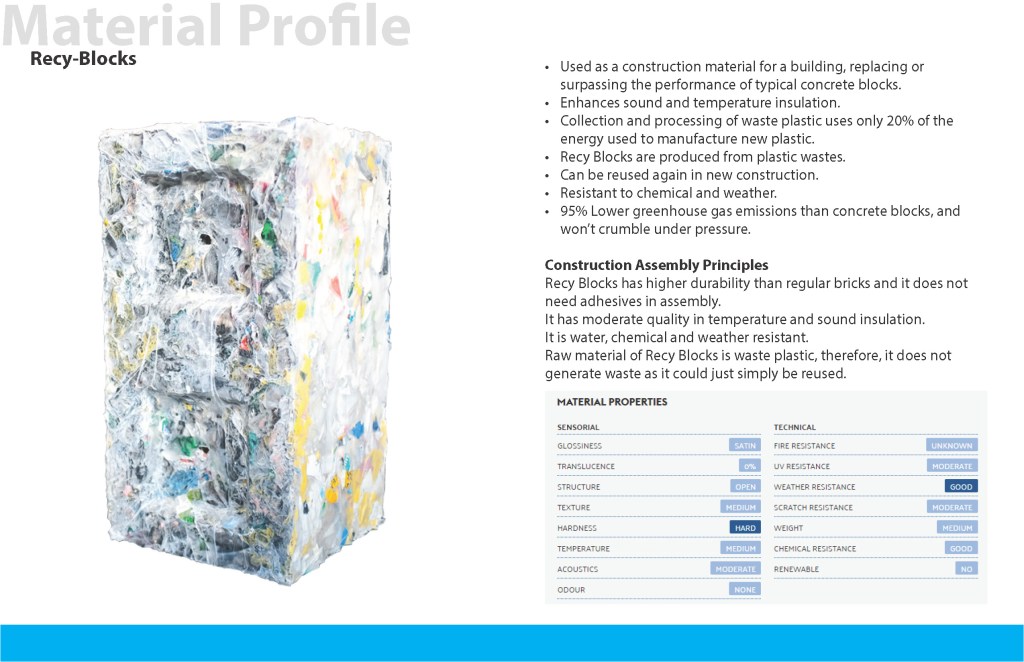
Our project examines two types of waste products: polymers and agricultural biproducts. Polymers are strong and easy to shape, but this highly engineered product almost cannot degrade by itself. Polymers require high levels of energy to produce, and are hard to reuse. For this reason, we have selected polymers as a potential construction material for our project.
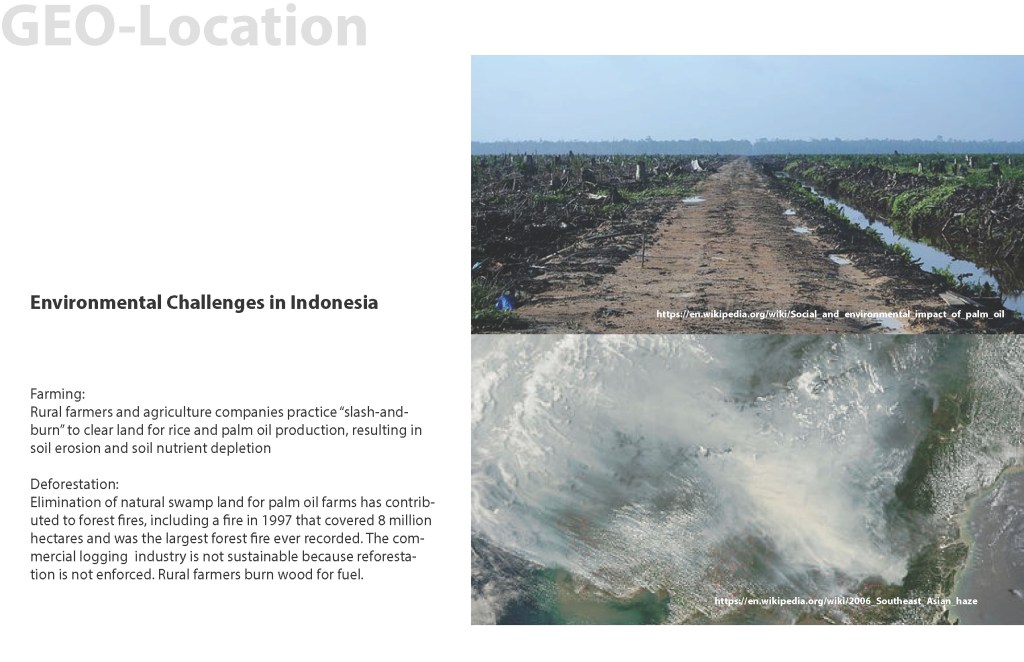
We have also examined agricultural byproducts, the rice husk in particular. Rice husks are an inevitable biproduct of rice production, and today there are few commercial uses for this byproduct. Most farmers in Asia will dispose of rice husks by burning, which causes air pollution, deforestation, and erosion. Our project proposes to capture the energy of this biomass through the process of gasification.
Just as we analyze the reasons for reusing this waste, we also want to understand their material properties, not only the energy required to produce and recycle these materials, but also the energy performance of these materials as components of a house assembly.
There are many opportunities to convert waste into new materials and forms of energy. However, we have chosen plastic because the problem of plastic waste needs an immediate solution before more damage is done. Similarly, agricultural byproducts like rice husks are harming the environment in the way they are disposed, and the energy stored in the biomass of rice husks represents an underutilized potential of the biproduct.
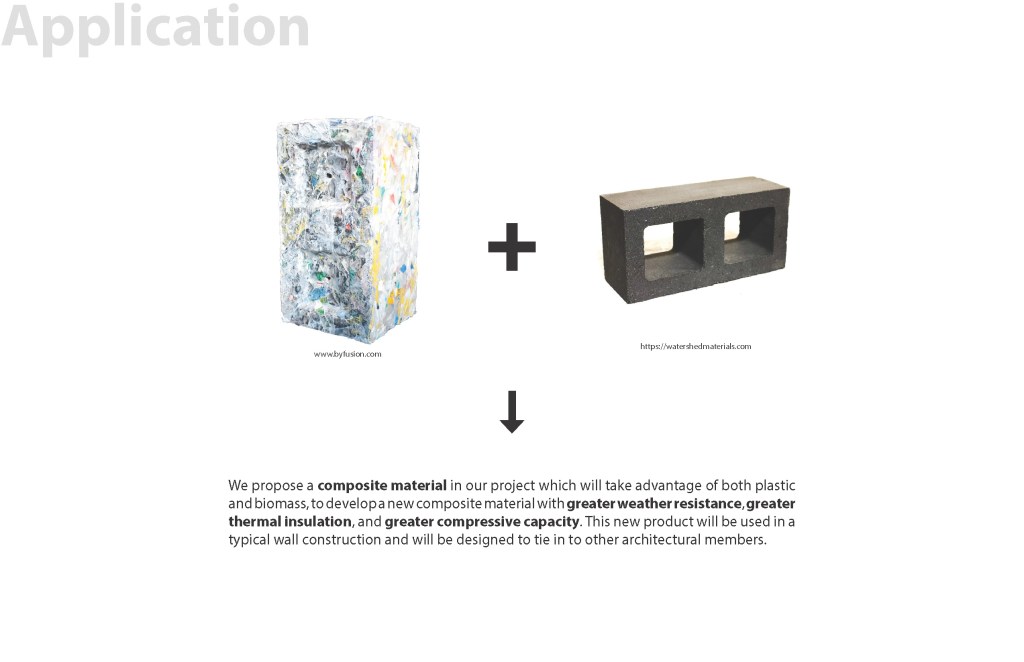
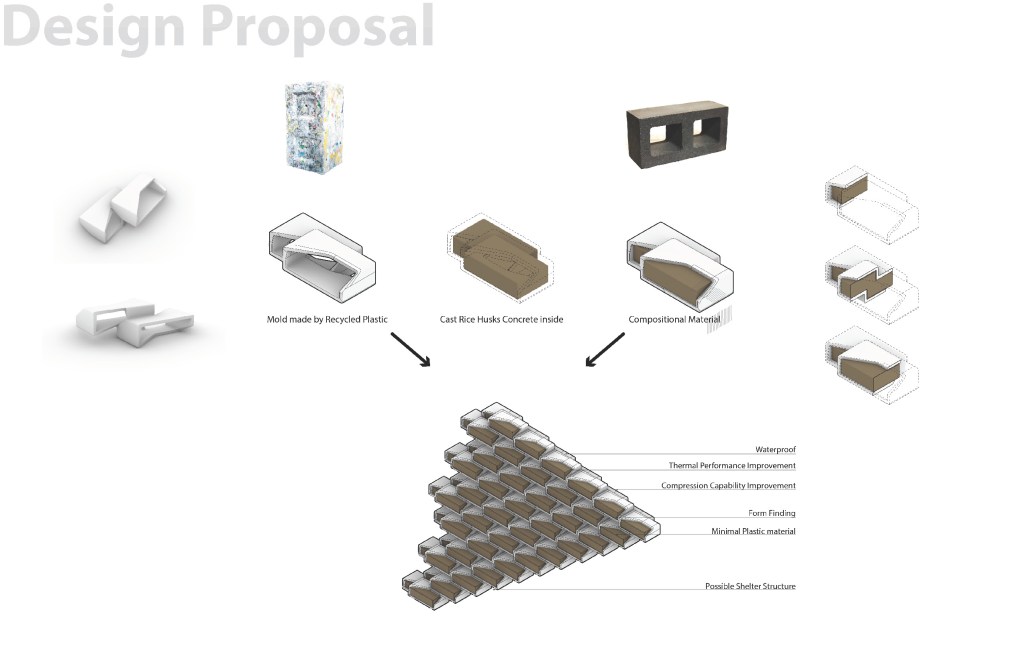
We propose a composite material in our project which will take advantage of both plastic and biomass, to develop a new composite material with greater weather resistance, greater thermal insulation, and greater compressive capacity. This new product will be used in a typical wall construction and will be designed to tie in to other architectural members.
We imagine our project to be located in Indonesia, which suffers from a need for temporary housing since the recent earthquake in the Sulawesi region. Indonesia also provides the opportunity to develop a use for rice hulls, which are common in the region due to the robust rice industry. We plan to use plastic and rice hulls as the materials of our project. In addition, rice husk gasification will become a source of electricity for the new shelters we propose.
Beyond the idea of reusing waste, our project brings other value. First, the materials will be very affordable, and the construction process will be simple. In addition, the aesthetic character of our proposal will recall the form of traditional housing in the region. Finally, the slope of the roof is designed to address the wet and hot climate of the region.
Through an innovative brick design, the geometry of our brick will stack in such a way as to create a sloped surface. The stacked bricks will act as a compression structure in multiple directions, and a series of tension members tied to the central post will hold the structure together.
We will use a mold of recycled plastic as the formwork to cast the interlocking geometry of rice husk concrete blocks. The plastic itself will play the role of waterproof joints. The project calls for dry assembly; no mortar is needed. This unique design creates many advantages, including enhanced waterproofing and thermal insulation. The blocks are identical, they can be reworked into different configurations, and they are reusable.
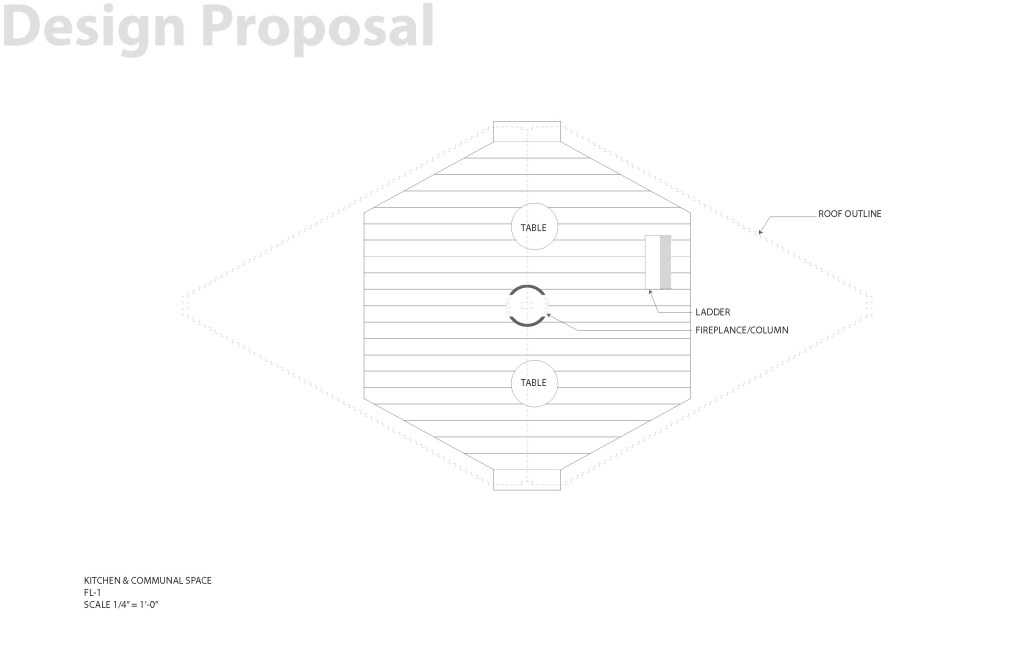
We are able to create this inverted masonry structure by introducing a tension cable system. All elements are tied back to the central column (which also serves as a chimney for the gasification system). Therefore, the project incorporates three essential elements; a central hearth, a cable skeleton, and a masonry skin.
Bibliography
Alwani Wan Chik, Farah & Bakar, B.H. & Megat Johari, Megat Azmi & Putra Jaya, Ramadhansyah. (2011). Properties of concrete block containing rice husk ash. International Journal of Research & Reviews in Applied Sciences. 8. 57-64.
“Byfusion machine converts plastic into sustainable bricks.” Instablogs.com, 6 Dec. 2010. General OneFile, http://link.galegroup.com/apps/doc/A243649194/ITOF?u=upenn_main&sid=ITOF&xid=c1160c58. Accessed 17 Oct. 2018.
Lewis, John. “Global Interest in Plastics Recycling Machine.” Otago Daily Times Online News, 5 Dec. 2010, http://www.odt.co.nz/news/dunedin/global-interest-plastics-recycling-machine.
Austin, HP, Allen, MD, Donohoe, BS, Rorrer, NA, Austin, Harry P, Allen, Mark D, Donohoe, Bryon S, et al. “Characterization and Engineering of a Plastic-Degrading Aromatic Polyesterase.” Proceedings of the National Academy of Sciences of the United States of America. 115, no. 19 (n.d.): E4350–E4357.
Cambodia, rice husk gasification: https://www.youtube.com/watch?v=0W6QYuZu0ro
Easton, Taj. “Watershed Materials – Technology for New Concrete Blocks.” Watershed Materials – Technology for New Concrete Blocks, watershedmaterials.com/.
John Fernandez, Material Architecture – emergent materials for innovative buildings and ecological construction (Elsevier, Architectural Press; 2006)
M Romero-Sáez, L Y Jaramillo, R Saravanan, N Benito, Romero-Saez, M, Jaramillo, L Y, Saravanan, R, et al. “Notable Photocatalytic Activity of TiO2-Polyethylene Nanocomposites for Visible Light Degradation of Organic Pollutants.” EXPRESS polymer letters. 11, no. 11 (2017): 899–909.
Petersen, Hanah. “Indonesia Tsunami: Crisis Worsens as Aid Struggles to Reach Island.” The Guardian, Guardian News and Media, 2018, http://www.theguardian.com/us.
Zaree, Seyed. “Rice Husk Ash as a Partial Replacement of Cement in High Strength Concrete Containing Micro Silica: Evaluating Durability and Mechanical Properties.” Case Studies in Construction Materials, vol. 8, 2018, p. i., doi:10.1016/s2214-5095(18)30146-3.
 MYRIADS Studio 大千设计