
Initial Proposal of New Distribution Center at JFK
Location: New York, USA
Year: 2017
Phase: Concept Design
Collaborator: Yihan Li, Danyang Lou
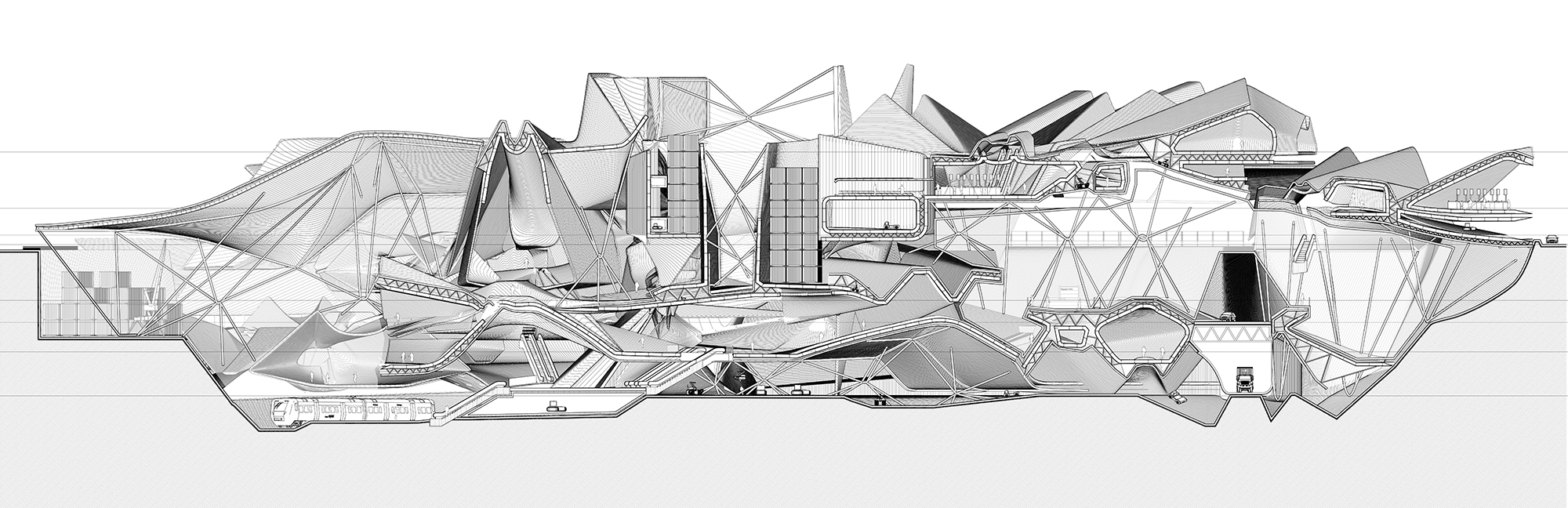
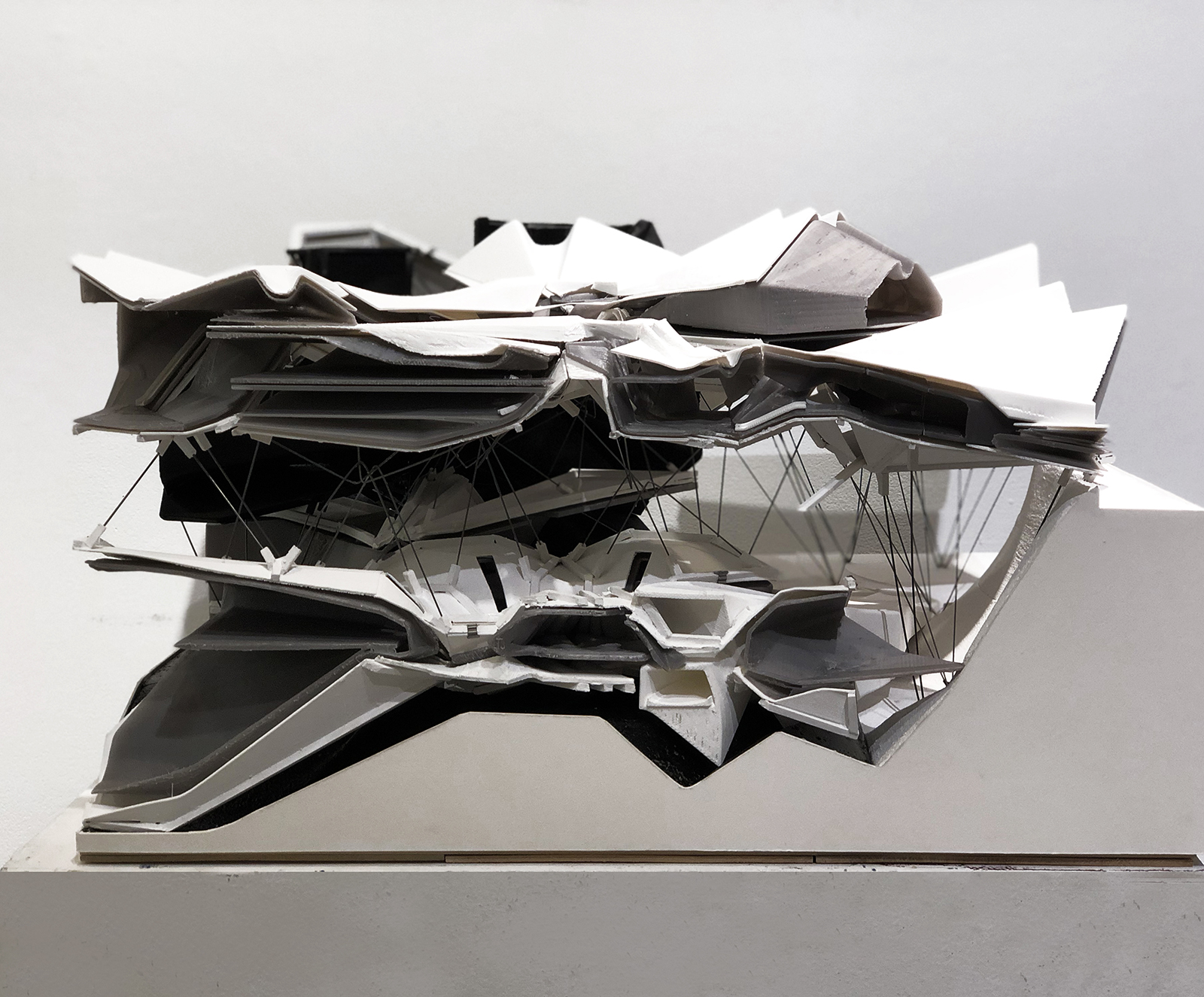
This design is initiated based on both vector studies and the idea of pocket space. Combining these two ideas, we found the method of generating corrugation on a surface. The nature of corrugation not only has vectorial qualities, but also has volumetric and spatial potentials, longer span, and directionality. We started to manipulate the surface by squishing one end of the surface to generate a compressed-corrugated end. Then we duplicated the corrugated surfaces, to see how it could be connected. Then we found that the corrugated end could be a strong structural point to connect two corrugated surfaces. The corrugated tip creates a volumetric support for a flat end. As a result, we generated an interlocking system between two corrugated surfaces as a prototype, and the two interlocking surfaces naturally form a pocket space. To create an enclosure from the pocket, we simply added an inner shell, which becomes our interior space throughout our project. To generate more possibilities of different and longer spans, we scaled and bifurcated the prototype to see what we could get as a long span structure and accommodate different programs.
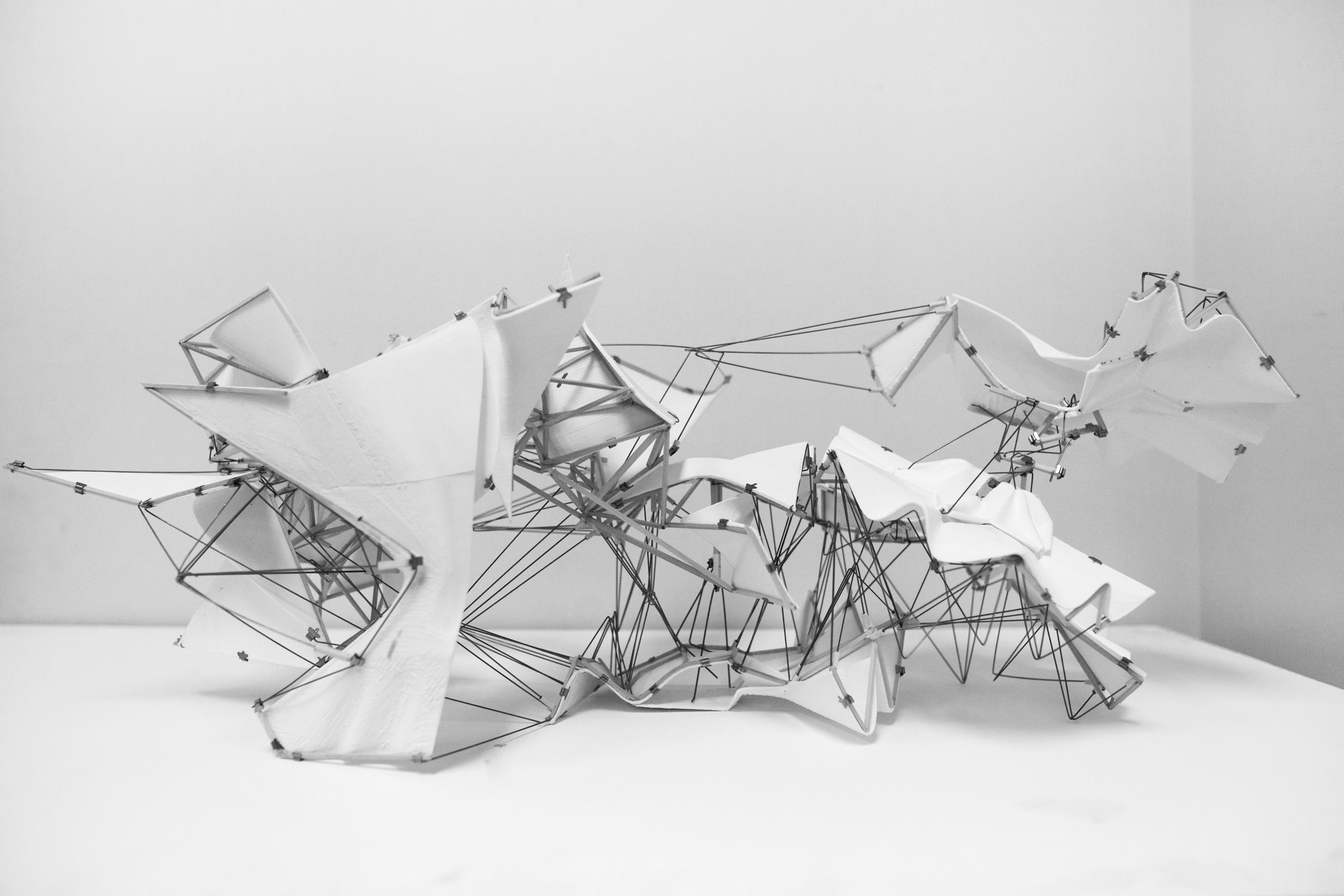
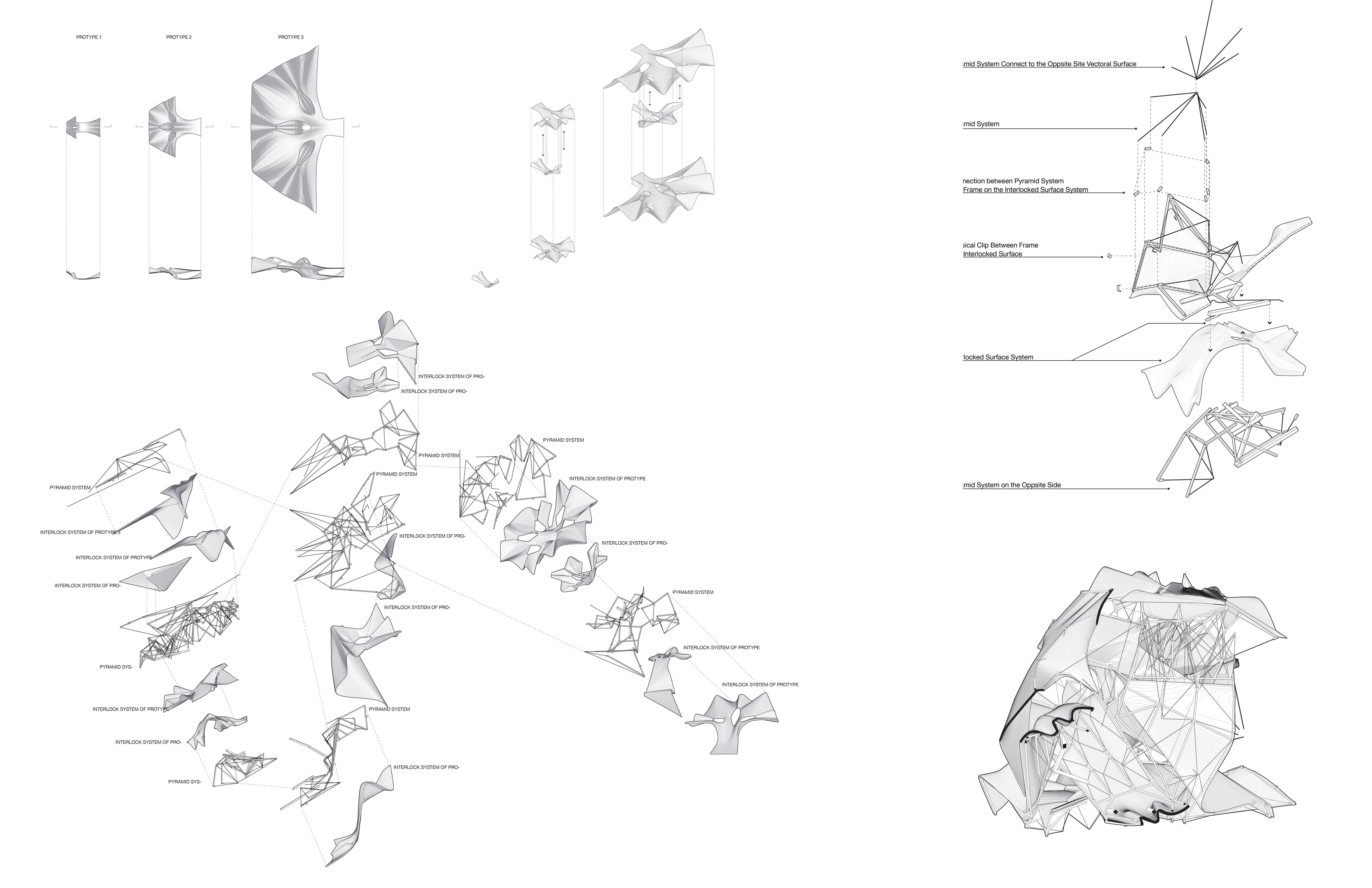
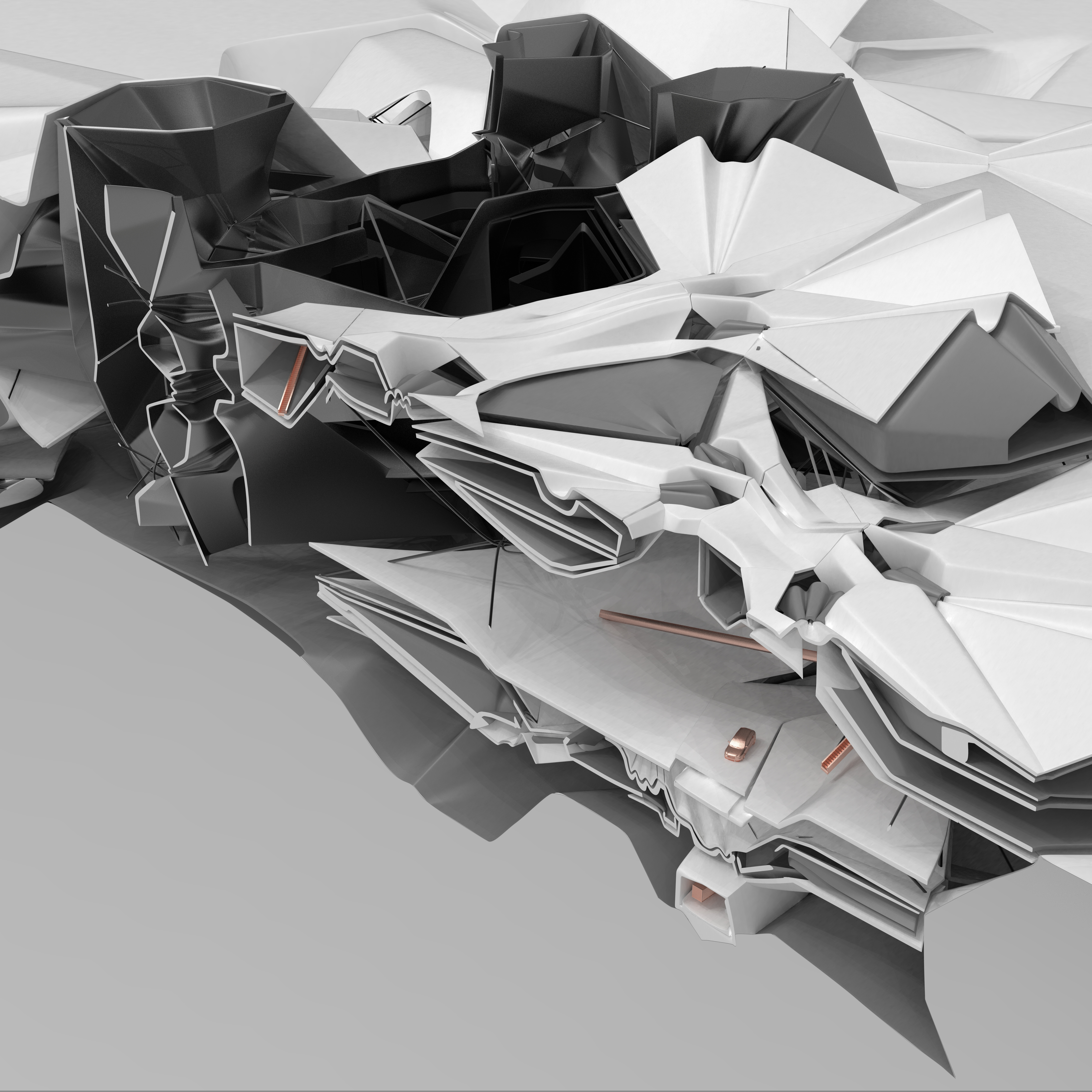
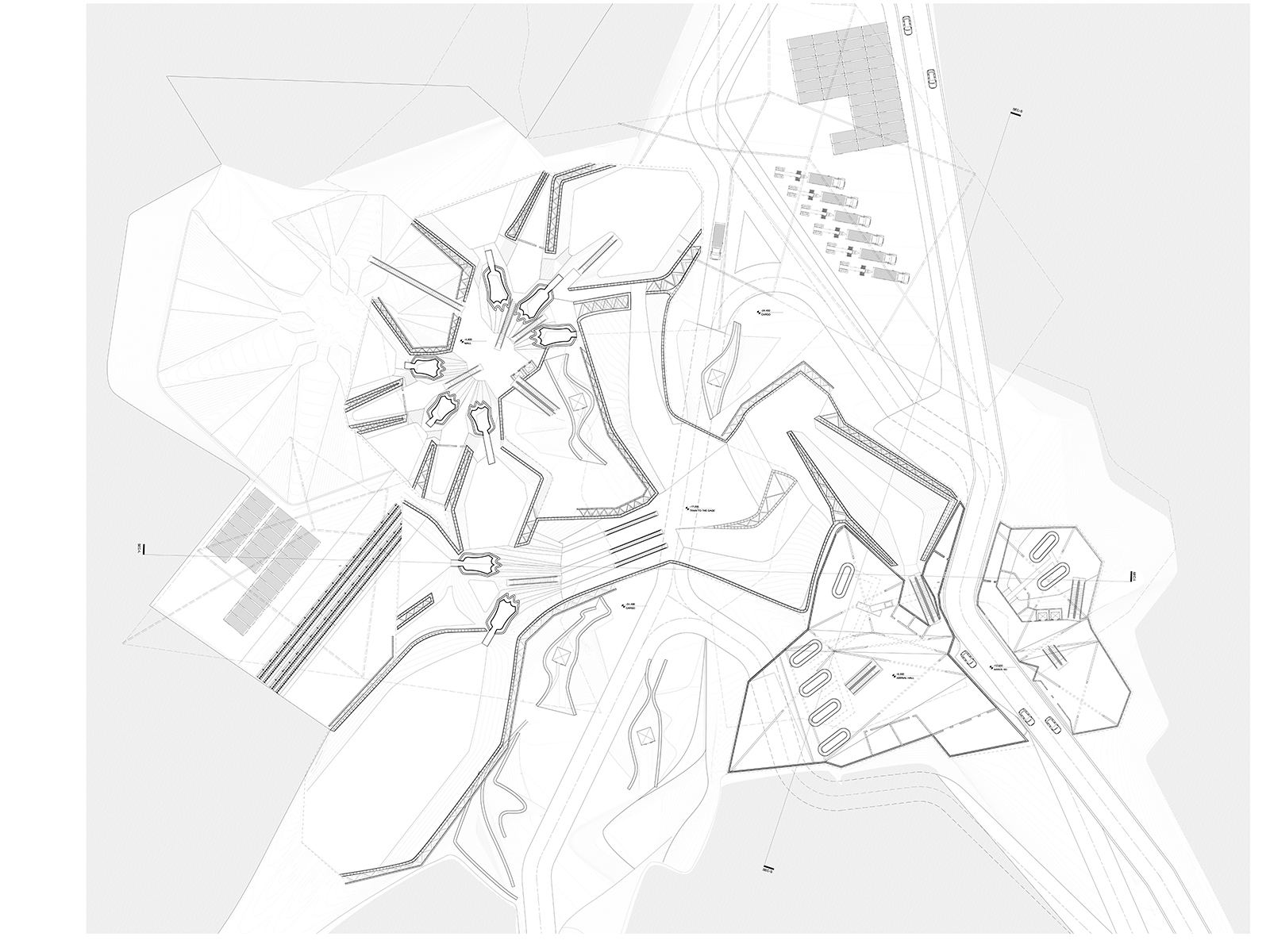
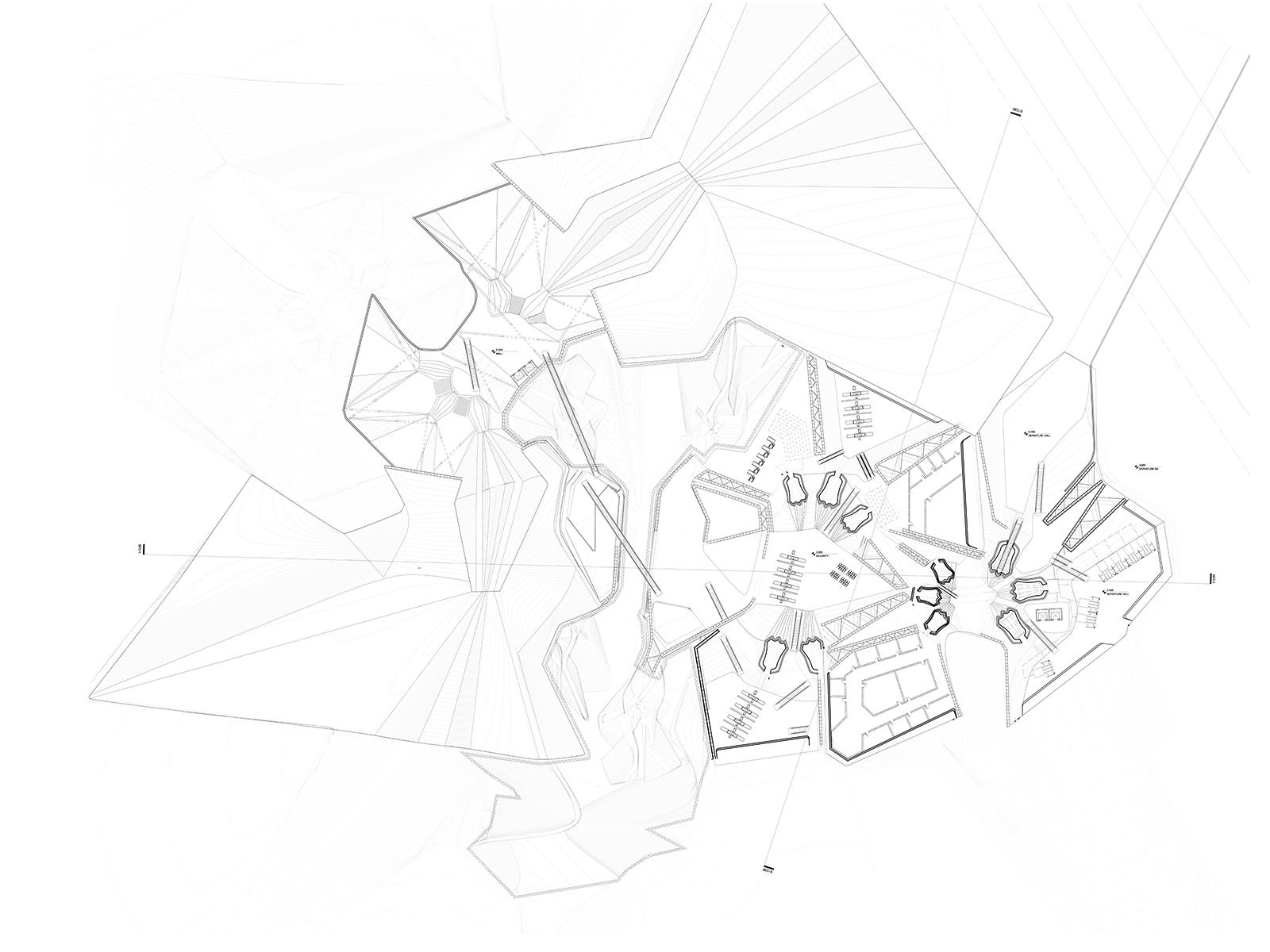
This interlocking prototype is utilized throughout our project. The design of the airport is focused on the interactions between human circulation and cargo system. We used the natural edges of the prototype as circulation routes and extended them if needed to create divergence to convergence and differentiate different circulation routes. Half of the building is sunk into the ground, and one road is connected to the departure area on the ground floor. Another road goes down to the arrival area and the two areas are connected by an extruding escalator. Between security and retail stores, the passengers will have to go through and experience the cargo systems, although separated.
 MYRIADS Studio 大千设计